Planning a Film or Photo Shoot in Connecticut
What scouts, photographers and content creators actually need to know before booking a shoot day here: the power, the access, the rules and which rooms fit which look.
This is a planning guide, not a pitch. It covers what a shoot day at The Knowlton actually includes: the power available, overnight access, the three rules that apply on set, and which of the rooms fits which look, using the real answers the team gives when a scout or photographer calls.
The building is the product, not the gear
The Knowlton isn't a gear house. Nobody hands you a lighting kit or a grip truck at the door. What's on offer is the building itself: an 1865 mill on the Pequonnock River in Bridgeport, 60 miles from midtown Manhattan, with a look that changes room to room without moving a truck. Express trains and Amtrak run to Bridgeport, so talent and crew can come up without a car.
Armstrong Manufacturing Company built here starting in 1865, and in 1896 the company built the Armstrong Phaeton on this same site, a petrol-electric hybrid credibly the first in the world. That history is part of why the building reads the way it does on camera: over a century of real industrial use, not a set dressed to look like one.
Two kinds of people end up here. Photographers and content creators booking one room for a day, and location scouts and producers looking at the whole campus for something bigger, a feature, a series, a commercial. Both get the same building, just at a different scale.
This is a location, not a rental house. Bring your own crew and gear; the building does the rest.

What a shoot day actually includes
The honest answer is that it depends on what you're shooting. A two-person crew doing a lookbook in the Wilder Gallery needs almost nothing beyond the room and the light. A commercial with a grip truck, a video village and a long call time needs a real conversation about load-in, power and parking. The day gets built around the shoot, not the other way around.
That's a genuine answer, not a dodge. A location that quotes the same package to a solo photographer and a film crew is either overcharging one of them or underserving the other. Tell us what you're making, how many people are coming and what equipment is showing up, and we'll tell you what the day looks like for that shoot.
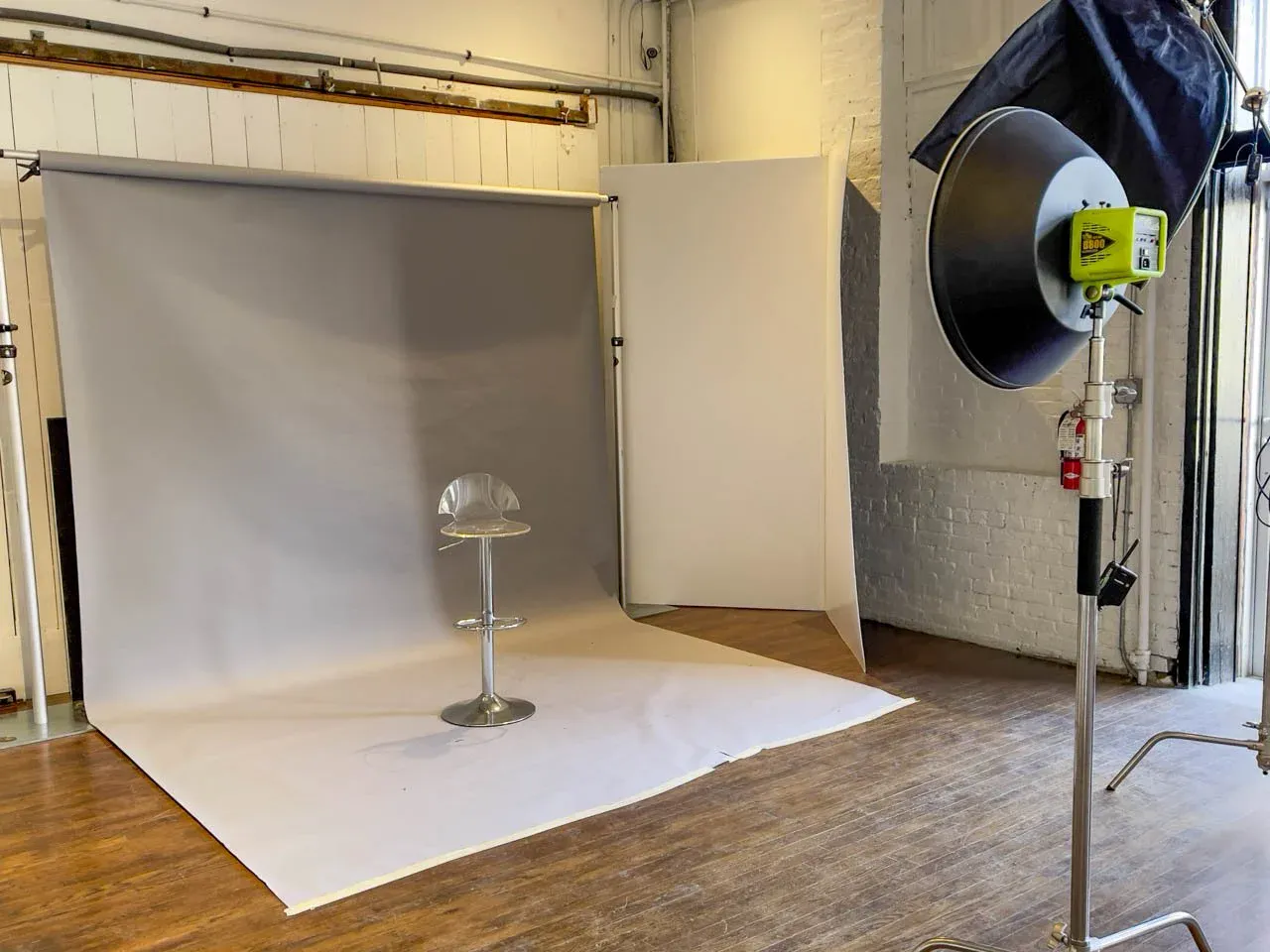
The rooms themselves are already used for this kind of work. The studio floors have hosted product photography and portrait sessions with a seamless backdrop already in place, so a shoot can start working the moment the crew walks in.
There's no fixed package. Tell us the shoot and we'll tell you what the day looks like.
The rules are short, and the latitude is wide
Most locations hand a crew a list of restrictions long enough to read like a legal filing. The Knowlton has three: carry the right insurance, do not damage the building, and no open flame anywhere on site. That is the list.
Inside those three rules, the latitude is real. This is not a location that says no by default and negotiates you up from there. If a production fits inside insured, no damage, no open flame, the answer starts at yes, and the conversation moves straight to logistics.
It's worth naming because it's unusual. A lot of scouting time gets spent finding out what a building won't allow before anyone gets to what it will. Here that part of the call is short, which leaves more time for the part that actually matters: whether the room looks right on camera.
Insured, no damage, no open flame. That is the whole list. Everything else is logistics, not permission.
Power, overnight access and how much time you get
The Boathouse has 28 individual 20-amp circuits, which covers most lighting and camera packages without running extension cords across the floor to a single outlet. The Armstrong and Wilder galleries have power of their own too, and more can be supplied if a production needs it, so it is worth stating your draw up front rather than finding a shortfall on the day.
Overnight access is possible, which matters for anyone shooting night exteriors, running a long setup into a night shoot, or working a schedule that doesn't fit inside daylight hours. Ask for it when you inquire, so it gets planned in rather than assumed.
How much time you get on the day follows the same logic as everything else here: it's built around the shoot rather than sold as a fixed block. A quick content day and a multi-day production need different amounts of time, and both get planned for what they actually are.
28 circuits in the Boathouse alone, power in both galleries, and overnight access when a shoot needs it.

The rooms, through a viewfinder
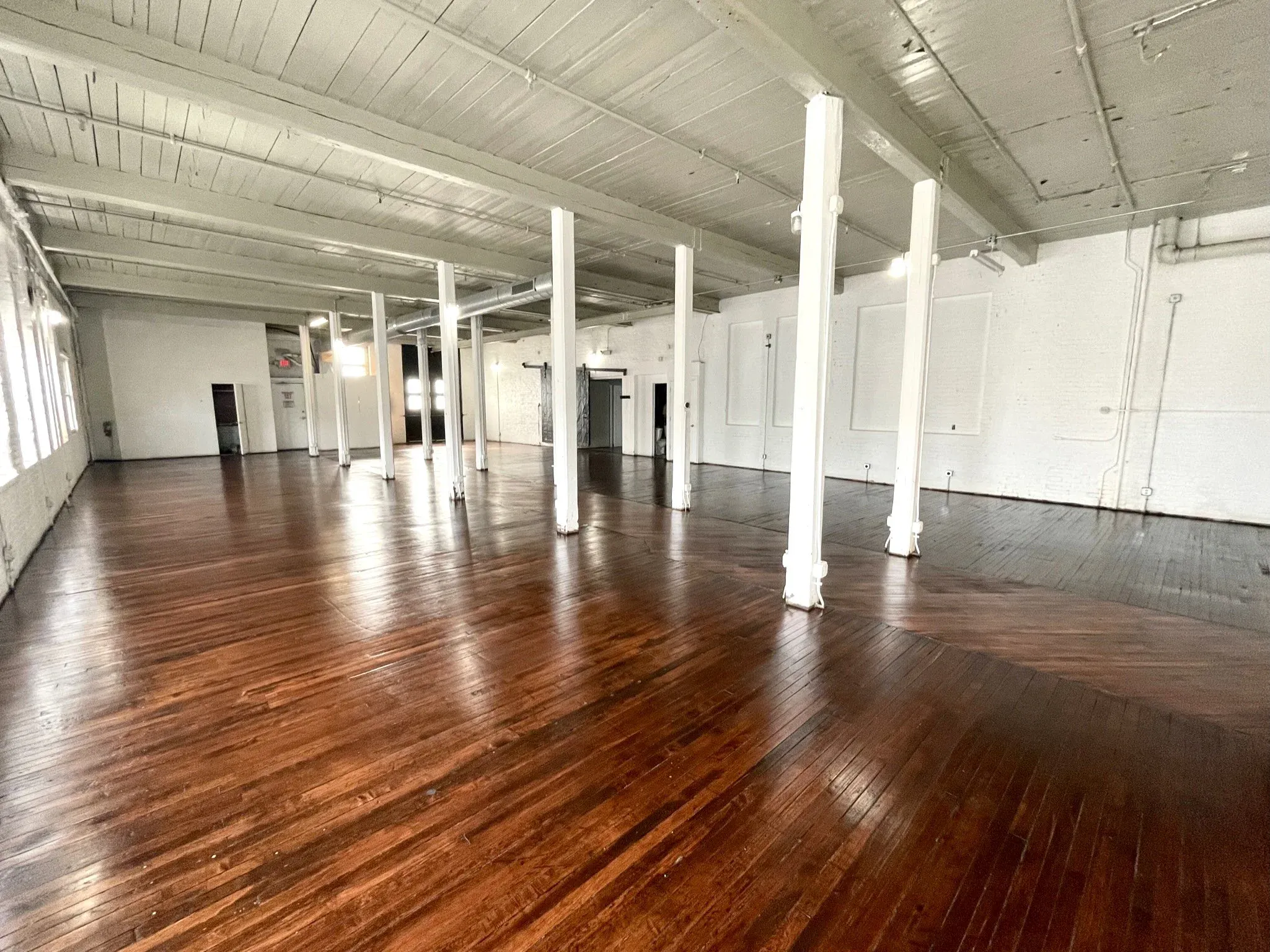
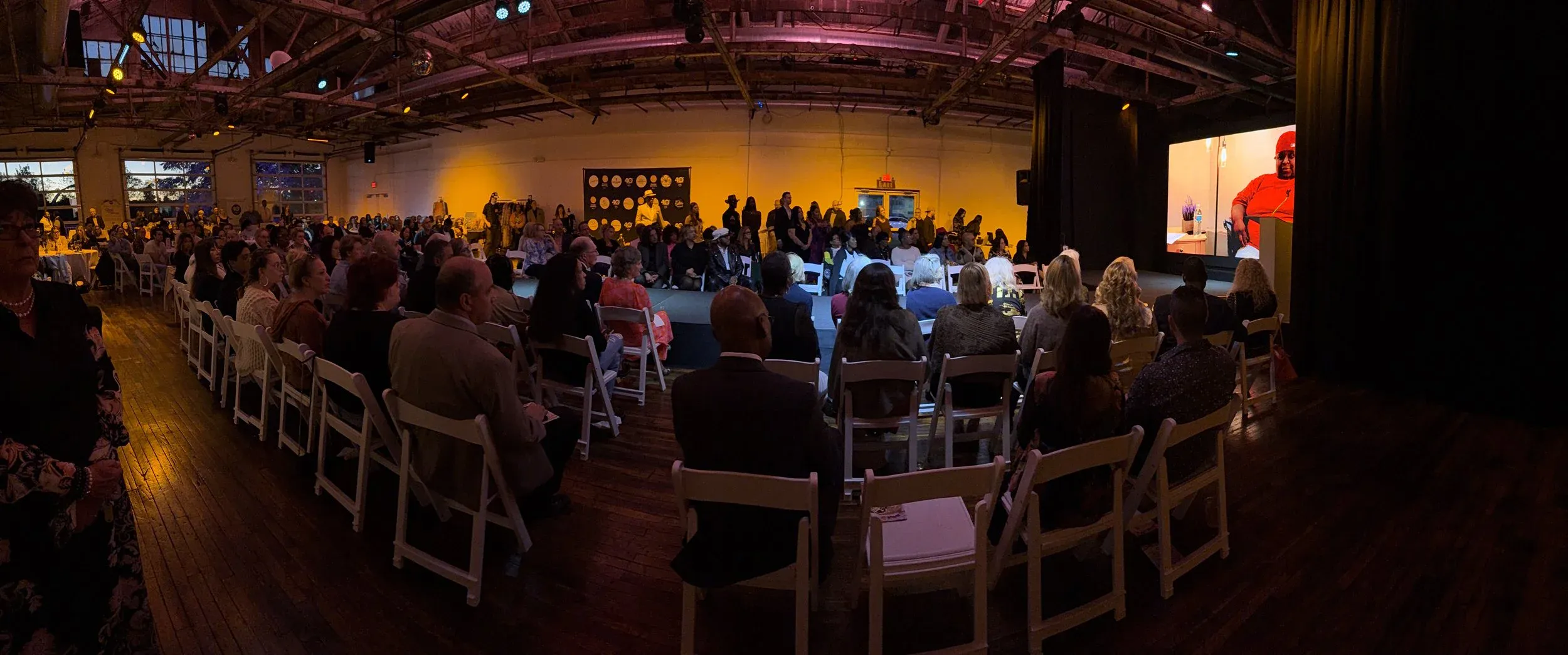
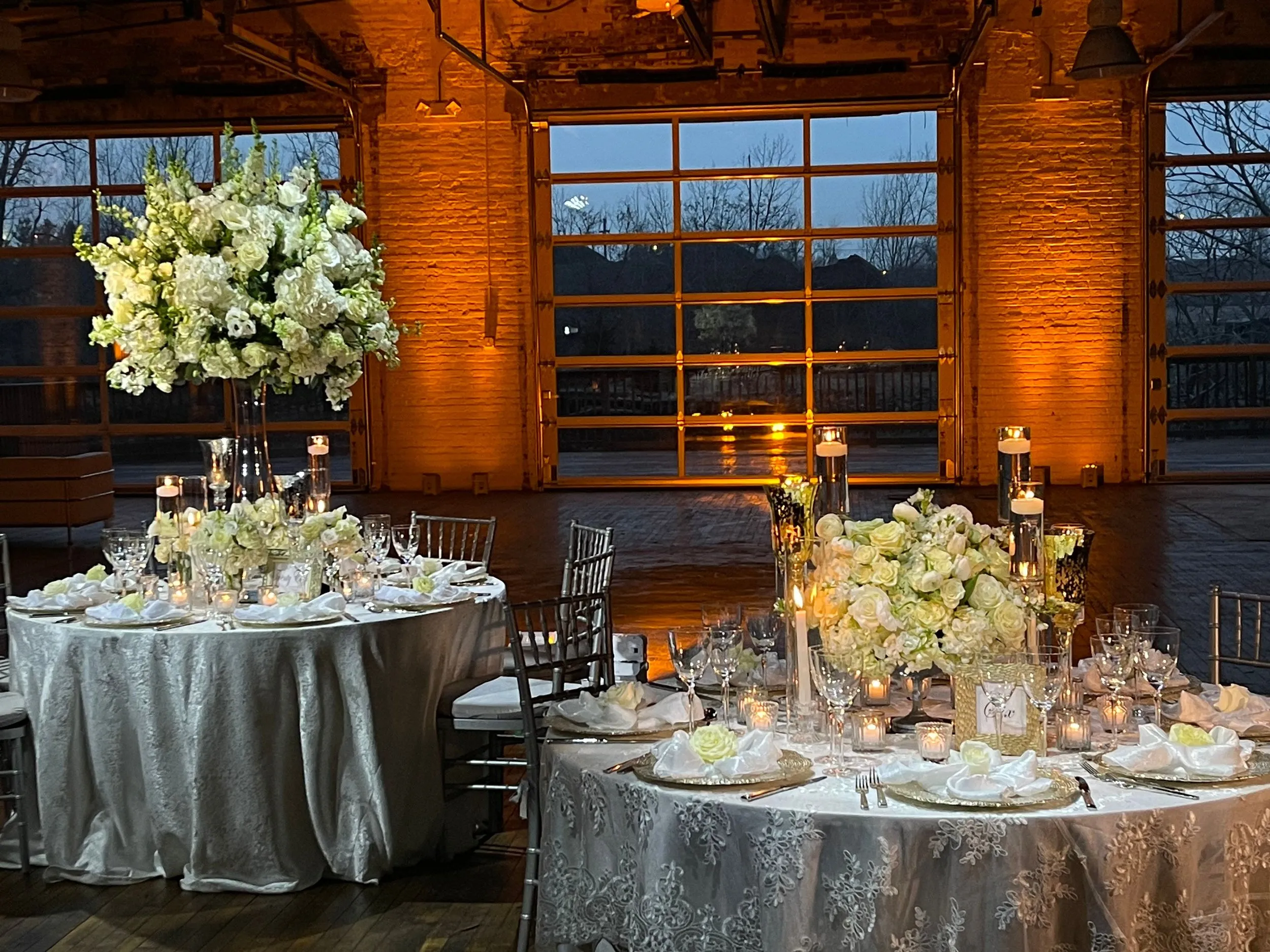
The Boathouse is the big volume: a 27-foot truss ceiling, three garage bay doors that open straight onto the water, and enough floor to build a set inside it without feeling cramped. It reads as an industrial soundstage because the whole campus was built for manufacturing, not styled afterward to look that way.
The Armstrong Gallery (1,400 square feet) and the Wilder Gallery (4,000 square feet) are the opposite move: white-box rooms, high ceilings, columns and rows of tall windows, built for art on the walls rather than machinery on the floor. They are the rooms for portraits, product work and anything that needs a clean background without a crew dressing it that way.
Above the event spaces, the studio floors add another look entirely: industrial corridors, original brick and daylight through steel-sash windows, the kind of texture a set decorator would otherwise have to fake.
The grounds: mural park, waterfront and parking
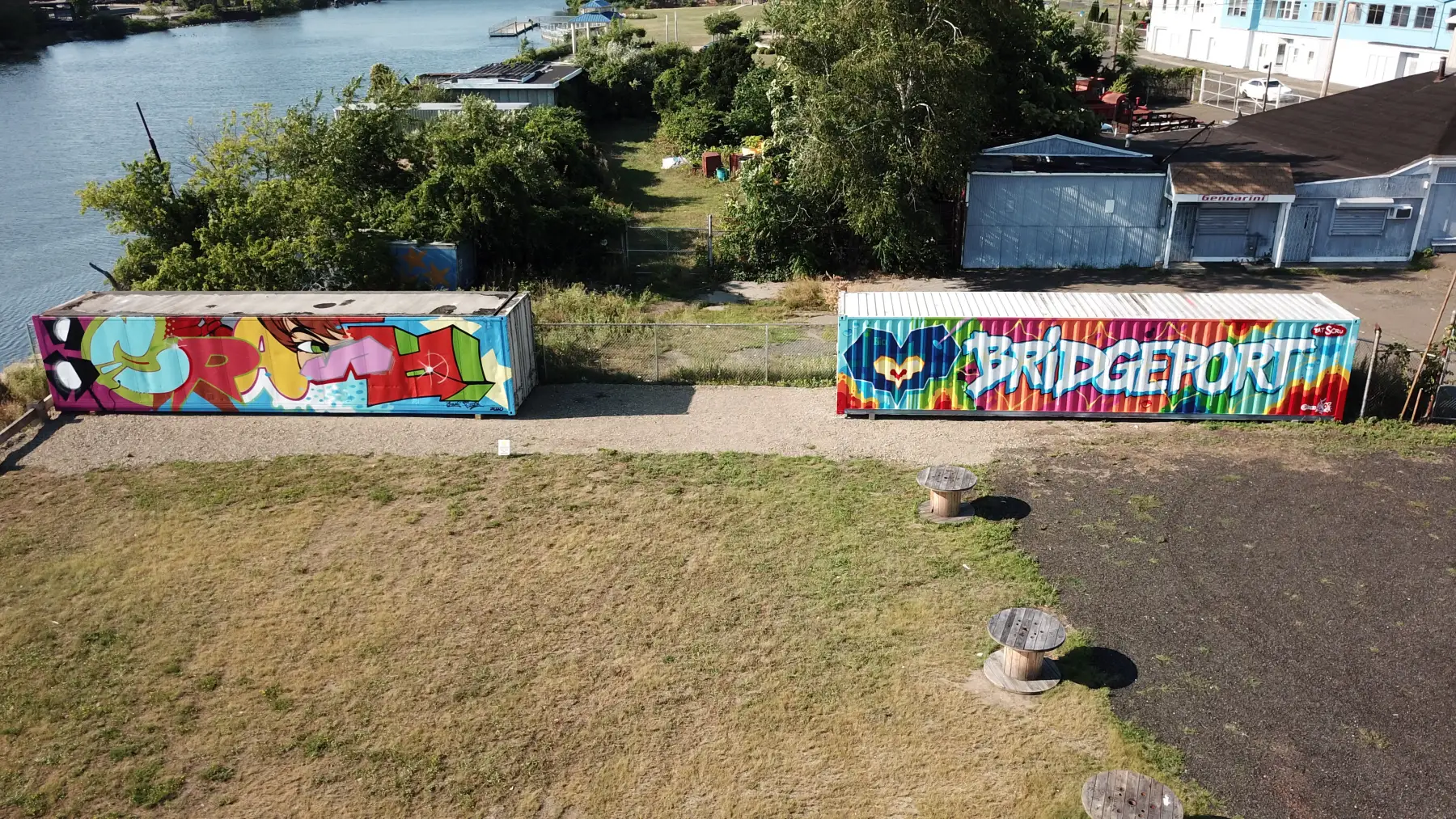
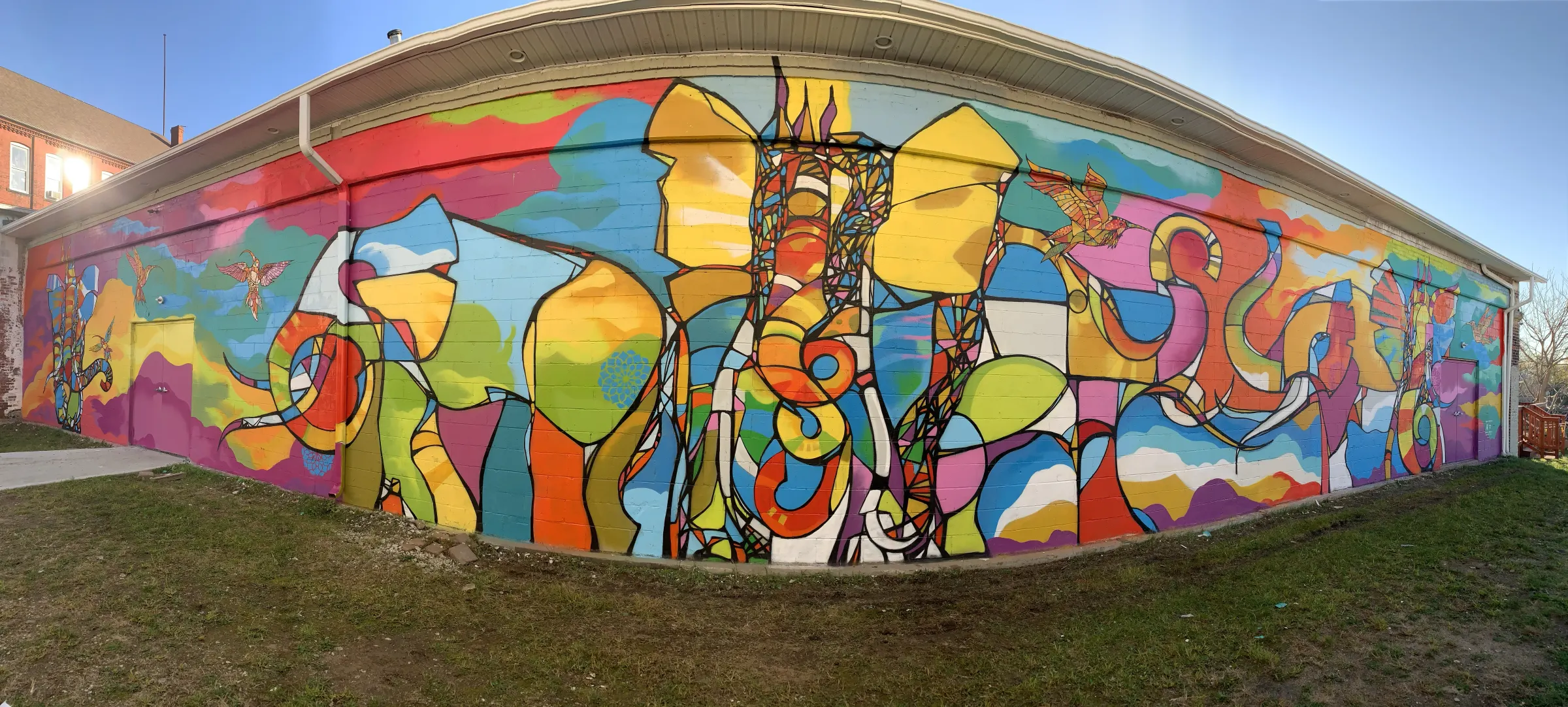
The building isn't the whole location. The Knowlton Walls mural park runs across the campus with large-scale outdoor work from named artists, including Craig Anthony Miller's Elephants, spanning a full wall corner to corner, and Joe Iurato's Never Give Up, a black-and-white stencil piece on brick. Both read as finished backdrops on their own, no styling required.
The grounds are open to walk and photograph without a booking, which is a genuine way to see how the murals and the waterfront light before committing a crew to a full shoot day.
Parking is 200 secured, on-site spaces, off I-95 Exit 27A, Routes 8 and 25 and the Merritt Parkway, which covers the crew and equipment for most productions without a separate parking plan.
Walk the grounds and the mural park before you book. No appointment needed.
A building that stays quiet on a recorded take
Big rooms with hard surfaces usually mean bad audio: every voice bounces, every take needs cleanup. The Boathouse doesn't have that problem. Concrete ceilings paired with wood floors keep the room from turning echoey, so a boom mic or an on-camera shotgun picks up a clean take without fighting the room.
That matters for more than dialogue. Anyone recording a live performance, an interview or a voiceover on location benefits from a room that does not need to be tamed with blankets and sound baffles before the first take.
Concrete overhead, wood underfoot: the room stays quiet enough to record in without extra treatment.
Booking a single day, or bringing a production
Most bookings here are one room for one day: a photographer working a lookbook, a content creator filming a week of posts in an afternoon, a small crew shooting a commercial spot. That is the simplest version of this, and the most common one.
Feature, series and commercial productions are a different scale, and the campus can take them. Location scouts are welcome to walk the whole site, not just the rooms open for a day booking, and the earlier that conversation starts, the easier it is to fit a bigger footprint into the calendar.
Either way, the way in is the same: tell us the dates, the size of the crew and what you're making, and we'll tell you which rooms fit and what a day here actually looks like for that shoot.
What scouts and photographers ask first
What's included in a day at The Knowlton?
It depends on the shoot. A solo photographer needs the room and the light; a full crew with a grip truck and a long call time needs a real conversation about load-in, power and parking. Tell us what you're making and we'll tell you what the day includes for that shoot, rather than fitting you into a fixed package.
Can we shoot overnight, or do we have to wrap by a set time?
Overnight access is possible. Ask for it when you inquire so it gets built into the schedule rather than assumed on the day.
How much power do you have?
The Boathouse alone has 28 individual 20-amp circuits. The Armstrong and Wilder galleries have power too, and more can be supplied if a production needs it, so it is worth telling us your draw when you inquire.
What are the rules for a shoot day?
Three: carry the right insurance, do not damage the building, and no open flame anywhere on site. Inside that, the latitude is wide. This is not a location that says no by default.
Do you supply lighting, grip or camera equipment?
No. The Knowlton isn't an equipment house, so bring your own crew and gear. What we provide is the location itself: the rooms, the power, the grounds and the parking.
How much does it cost to shoot here?
There's no published day rate. What a shoot costs depends on the room, the length of the day and the size of the production, and gets quoted once we know what you're making. Tell us your dates and the scope and we'll send a proposal.
Walk the building before you book the day.
Full room specs, the gallery of looks and the inquiry form live on the locations page. Tell us your dates, your crew size and what you're making.